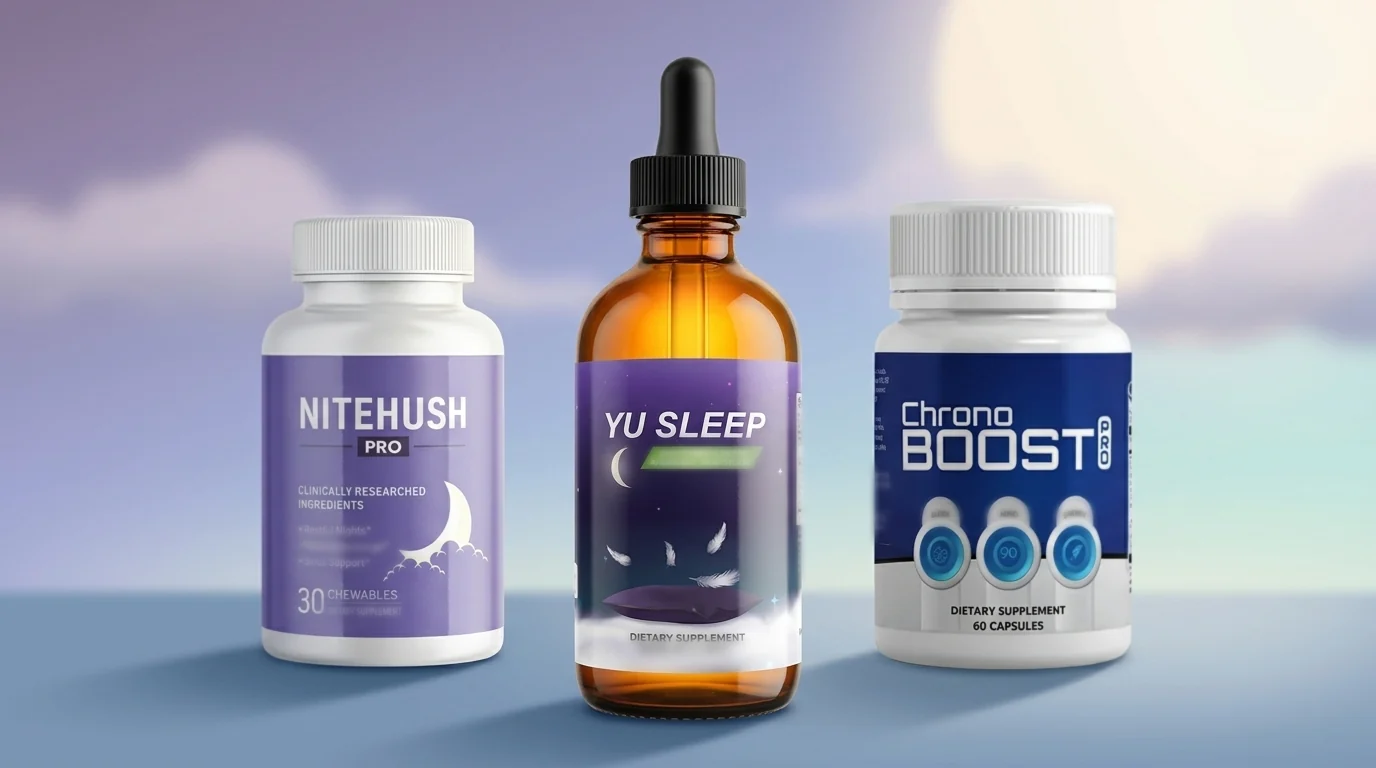
Top 3 sleep supplements of 2026. What actually keeps you asleep.
Falling asleep and staying asleep are two different problems. We compared three of the most advertised sleep formulas in the US by mechanism, formula, price and refund terms.
Last checked October 2026. Formulas, prices and refund terms were taken from each seller’s official page on that date and can change without notice. Fact-checking is still pending for this article.
Falling asleep and staying asleep are two different problems.
Most people who buy a sleep supplement are not struggling to feel tired. They are struggling to stay down. They fall asleep fine at eleven, surface at 3 AM, and spend the next two hours watching the ceiling. Or they sleep a full eight hours and wake up feeling as though they did not sleep at all.
Those are different problems with different causes, and no single formula addresses all of them. Each of the three below is built around a different mechanism, and the right one depends on what is actually waking you up.
One of them, though, stood apart on the criteria that matter most: how much melatonin it carries, how the formula reaches your bloodstream, and what the refund actually costs you to use. Yu Sleep is our pick for most people, and the sections below explain exactly why.
What you will find in this guide
Three products compared on mechanism, formula, real cost and refund terms.
A clear statement of who each one is not for.
Brand claims separated from what we could actually verify.
The pricing is nearly identical across all three: $49 and $59 per bottle on the larger packages, landing on the same $294 and $177 totals. That is the standard ladder in this category, not a reflection of what is inside the bottle. Price is not the deciding factor here. Mechanism, melatonin load and refund terms are, and on all three, Yu Sleep is the one that separates itself.
The table says Yu Sleep. Want to see the offer?It is the only one of the three built for staying asleep rather than falling asleep.
How the options are compared.
Mechanism, not marketing
Every sleep supplement claims to help you sleep. The useful question is how. A formula built to shorten sleep onset is doing something different from one built to keep you under all night.
Real cost and real terms
Headline prices are per bottle on the largest package. We calculated what you actually pay to get started, including shipping, and read each refund policy line by line.
Evidence and limits
Ingredient lists are easy; disclosed doses are rare. We noted where a brand publishes amounts, flagged melatonin load, and said plainly who each product is not for.
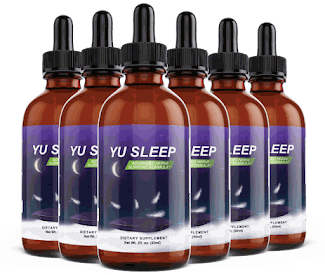
Yu Sleep is a liquid formula taken under the tongue, two droppers about thirty minutes before bed. That delivery method is the whole argument for the product: a capsule has to clear your stomach and liver before anything reaches your brain, which is why swallowed sleep aids so often arrive after you are already awake and watching the clock.
The formula carries only 0.9 mg of melatonin, a fraction of the 5 to 10 mg common in pharmacy products. Around that minimal dose sit nine compounds associated with sustained sleep rather than sedation: tart cherry, apigenin, L-theanine, GABA, magnesium glycinate, 5-HTP, lemon balm and the B vitamins that support them.
The brand frames the problem as a depleted sleep-pressure system, referring to adenosine, the molecule that accumulates through the day and creates the pull toward sleep. Adenosine’s role is well established in sleep science. Whether a supplement can restore a depleted sleep drive is the brand’s position, and we found no published peer-reviewed trial on the finished formula.
0.9 mg melatonin, roughly a tenth of a standard drugstore dose, which is the main reason morning grogginess is a smaller risk
Sublingual liquid bypasses stomach and liver, so nothing waits on digestion
Ten named ingredients, with the melatonin dose published at 0.9 mg
Targets staying asleep, not only falling asleep
Refund is money back, with no requirement to ship product back at your cost
Free shipping on the 3- and 6-month packages
Nothing to swallow, and no sedatives or stimulants
Cons
No single-bottle option, the minimum entry is $138 plus shipping
Individual ingredient amounts are not published, so doses cannot be checked against the research
The brand’s headline figures are company-reported with no independent source, so we left them out
The liquid has a taste, and no capsule version exists
What buyers report most often
Sleeping through to morning instead of surfacing at 3 AM, usually described from the second week rather than the first night.
Waking clear instead of heavy. This comes up almost as often as the sleep itself, which lines up with the 0.9 mg dose.
The routine being easy to keep. Two droppers, thirty seconds, no water, no pill to swallow.
The brand also displays a star rating and a review count on its own page.
Source: testimonials published by the manufacturer on its own website. Selected, company-hosted feedback rather than independent verification. We looked for third-party aggregation and found none.
This is our overall pick, and on the points that decide whether a sleep supplement does anything, it is not close.
The 0.9 mg melatonin dose is the clearest signal. Competitors load 5 or 10 mg because it produces a strong first night and a good first impression. Going the other way costs the brand its easiest marketing win, and companies do not make that trade unless they are aiming at something more durable.
The honest catch is the commitment: you cannot buy one bottle. The 60-day guarantee covers the full window, though like the other two it asks you to send the bottles back at your own cost.
Why it belongs on the shortlist
It is the only one here built for sleep maintenance rather than sleep onset. The other two are designed to get you under. This one is designed to keep you there, which is the difference that matters if you fall asleep fine and then find yourself awake at 3 AM doing the maths on how many hours are left.
Why we ranked Yu Sleep #1
Our editorial team assesses each product against the same criteria: formulation, label clarity, ingredient research, serving convenience, manufacturing information, customer feedback, safety disclosures, pricing and purchasing policies. Several things made Yu Sleep stand out.
0.9 mg of melatonin, roughly a tenth of a common retail dose, which is a deliberate design choice rather than a shortcut
Built for sleep maintenance, not just sleep onset. It is the only one here aimed at the 3 AM waking
Sublingual delivery, so the formula is not waiting on digestion while you lie there
The melatonin dose is published at 0.9 mg, the one number that matters most here, while the rest of the blend is not itemised
The refund accepts opened bottles, so the one you actually tried still counts
Made in the USA, non-GMO verified, GMP certified
One-time payment with no autoship enrolment
Twenty cited references on the manufacturer’s own page, which is unusual in this category
Yu Sleep earned its position on formulation logic, label transparency and purchase terms, not on guaranteed outcomes. Ingredient research should not be read as proof that the finished formula produces the same results seen in studies of isolated compounds. No published trial exists on the complete product, and individual amounts are not disclosed.
Expert evaluation
We reviewed the ingredient profile, listed amounts, serving directions, label transparency, manufacturing information, customer feedback, safety warnings, refund terms and overall value. This was an editorial evaluation of available product information rather than independent laboratory or clinical testing.
Our finding: Yu Sleep stands out for solving a problem the rest of the category ignores. Most sleep products compete on how fast they put you under. This one competes on whether you stay under and how you feel at 7 AM, and it accepts a weaker first night in exchange. That is a harder product to sell and a better one to own.
02 / COMPARISON OPTIONLast checked October 2026
Sleep support · Best all-in-one
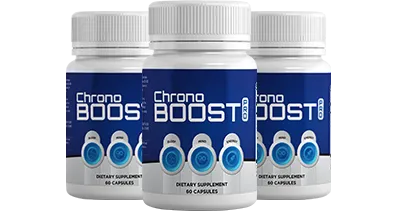
ChronoBoost Pro
The broadest formula here, aimed at poor sleep and low daytime energy together rather than at the night alone.
8.7
B+
Overall grade
Broadest formula. Loses points for the proprietary blend and the return requirement.
ChronoBoost Pro is the widest formula of the three. The brand describes it as a 3-in-1 for sleep, mental clarity and energy, and the ingredient list reflects that: more than eighteen compounds spanning sleep support, adaptogens, amino acids, vitamins and minerals.
The framing centres on the glymphatic system, the brain’s overnight waste-clearance process, which is a genuine area of sleep research. Inositol, L-theanine and L-taurine are presented as the core of that angle, alongside familiar sleep ingredients and daytime adaptogens like ashwagandha and goji berry.
That breadth is both the appeal and the limitation. If your complaint is that you sleep badly and drag all afternoon, this is the only one here that addresses both ends. If you specifically wake at 3 AM, a narrower formula is more likely to be dosed where it matters.
The widest formula here, covering sleep, stress and daytime energy in one capsule
Includes ashwagandha and adaptogens the other two do not carry
60-day refund window
A 30-day bottle is available if you want the smallest possible commitment
Free US shipping on the 180-day package
Cons
Refunds accept only unopened bottles, so the one you tested cannot go back
Proprietary blend: with 18+ ingredients and no published amounts, several are almost certainly present at token doses
Shipping fees apply to the 30- and 90-day packages
Marketing leans on user counts and unnamed celebrity usage that cannot be verified
Contains St. John’s Wort, which interacts with a long list of prescription medications
What buyers report most often
Falling asleep without feeling sedated. The absence of a knocked-out feeling is the most repeated point.
Steadier afternoons, with less of the 3 PM wall that sends people back to coffee.
A gradual change over two to four weeks, not a first-night effect, which is what a precursor formula would be expected to produce.
The sales page also cites a user count and references professional athletes and public figures without naming them. We found no verification of either and do not treat unnamed celebrity usage as evidence.
Source: testimonials published by the manufacturer on its own website. Company-hosted feedback, not independent verification.
The honest case for ChronoBoost Pro is the single bottle. At $79 you can find out in a month whether it does anything for you, which neither of the others allows.
The honest case against it is the refund condition. A 60-day money-back guarantee and “ship unopened bottles back at your own cost” are not the same promise, and the second one is what is written. Budget for that, or buy the smallest package.
Why it belongs on the shortlist
It fills a gap the other two leave open: the reader whose problem is as much the afternoon slump as the night before. The price of that breadth is a formula you cannot verify.
03 / COMPARISON OPTIONLast checked October 2026
Sleep support · Best for snoring
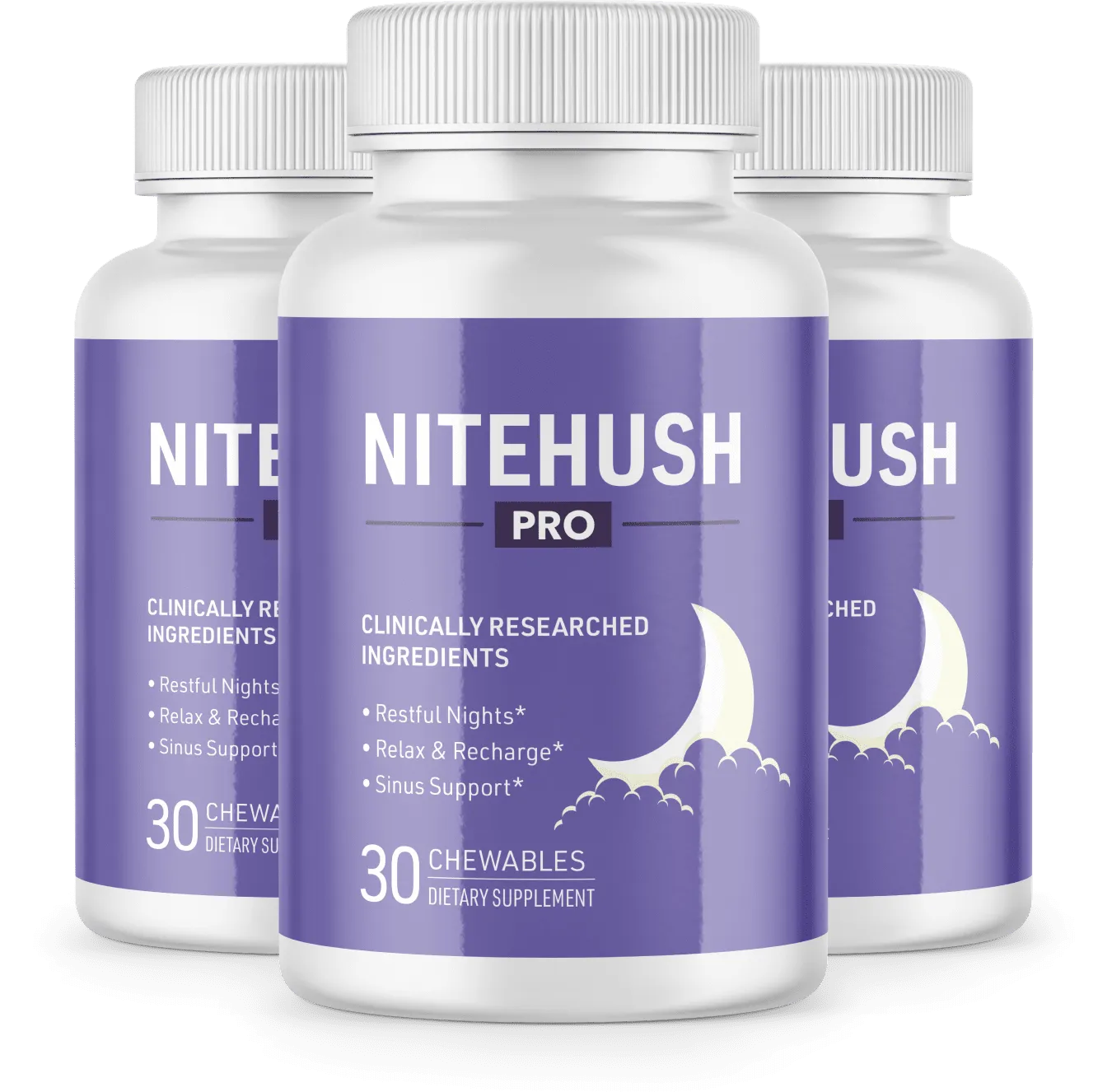
NiteHush Pro
A chewable aimed at airway function rather than sleep signalling. Snoring does not just annoy the person next to you: it fragments your own sleep all night, which is why you can spend eight hours in bed and still wake up wrecked. This is the only one here built for that.
8.4
B+
Overall grade
Narrow but honest. Built for snoring, not for 3 AM wake-ups.
NiteHush Pro is the outlier here, and it is on this list for a specific reader: the person whose sleep is broken by snoring, their own or the person next to them.
It is not a sedative formula and contains no melatonin. The approach targets airway function rather than the brain’s sleep signalling, with six ingredients selected for circulatory and anti-inflammatory activity: citrus hesperidin, ivy extract, serratiopeptidase, liposomal quercetin, glucoraphanin and naringin. It comes as a chewable, a small but real advantage for anyone who struggles swallowing capsules at bedtime.
One point needs stating plainly: snoring and sleep apnoea are not the same thing, and this is not a treatment for apnoea. If you have been told you stop breathing in your sleep, or you wake gasping, that needs a doctor and a sleep study rather than a supplement.
The only formula here aimed at the airway rather than sleep signalling
No melatonin and no stimulants, so no morning grogginess risk from the formula itself
Chewable format, easy to take
Single-bottle option at $69
60-day money-back guarantee, with no return requirement
Cons
Narrowest use case. It does nothing for racing thoughts or 3 AM wake-ups
Only six ingredients, with no disclosed amounts
The stated mechanism is the brand’s own framing, not an established clinical model
Free shipping only on the 6-bottle package
Not appropriate as a response to diagnosed or suspected sleep apnoea
What buyers report most often
The partner notices before the user does. This is the most credible detail in the whole set, because snoring is the one thing a person cannot self-report.
Easier nasal breathing and less congestion through the night.
Less throat dryness on waking, which is consistent with breathing through the nose instead of the mouth.
Two to four weeks before the change is noticeable, matching an anti-inflammatory mechanism.
The brand displays a star rating and a review count on its own page.
Source: testimonials published by the manufacturer on its own website. Company-hosted feedback, not independent verification.
This is a narrow recommendation and we would rather be clear about that than oversell it. If snoring is what is wrecking your sleep, NiteHush Pro is the only product on this list built for it, and at $69 for a single bottle the cost of finding out is low.
If snoring is not your issue, this will not help you. It is not a general sleep aid and does not claim to be.
Why it belongs on the shortlist
It answers a question the other two cannot. The reader who snores is not served by a calming formula, and pretending otherwise would be the easy, useless recommendation.
Read the full breakdown, or go straight to the sourceBoth are one click away.
What real users report
Where these come from. The testimonials below are published by each manufacturer on its own website. We reproduce the recurring themes with that attribution rather than presenting them as independent verification. We looked for third-party aggregation and did not find a meaningful source for any of the three.
Yu Sleep
The themes that repeat: sleeping through the night instead of surfacing at 3 AM, and waking clear-headed rather than heavy. The second one appears as often as the first, which is consistent with a formula built around a low melatonin dose.
Users describe falling asleep more easily without feeling sedated, steadier energy through the afternoon, and a gradual change over two to four weeks rather than a first-night effect. That timeline is what you would expect from a precursor formula.
The recurring detail is that the partner notices before the user does, which is the most credible thing in the set because it is the one a person cannot self-report. Easier nasal breathing and less throat dryness also come up repeatedly.
This single question decides the answer. If you fall asleep easily and surface at 3 AM, you have a sleep-maintenance problem, so go with Yu Sleep. If you sleep through but wake exhausted and drag all day, you want the broader formula, so go with ChronoBoost Pro. If you or your partner report snoring, start with NiteHush Pro.
Watch the melatonin number. If you have been taking 5 or 10 mg and waking up foggy, that is a known effect, not a personal failing. Lower doses are the direction the research is moving.
Read the refund terms before the price. All three say 60 days. All three ask you to ship the bottles back at your own cost. The difference is what they accept: ChronoBoost Pro takes only unopened bottles, so the one you actually tried is not refundable.
Give it longer than a week. None of these are sedatives. They are not designed to knock you out on night one, and judging them after three nights tells you very little.
Talk to a pharmacist if you take anything prescribed. This is not a formality. 5-HTP interacts with antidepressants. St. John’s Wort interacts with a long list. A two-minute conversation at the counter is free.
When a supplement is the wrong tool. Persistent insomnia lasting more than three months, waking gasping or choking, loud snoring with daytime sleepiness, or sleep problems alongside low mood are all reasons to see a doctor rather than try another bottle. A sleep study diagnoses things no formula addresses.
Decided which one fits your nights?Prices and promotions change, so confirm the current offer before ordering.
Final verdict
If you came here for one answer: Yu Sleep.
You know how tonight goes. You fall asleep fine. Then your eyes open and the clock says 3:04 AM. You do the maths on how many hours are left, and the maths keeps you awake. By the time you drift off again the alarm is forty minutes out, and tomorrow is already spent before it starts.
The other version is quieter than you think. You go under, you stay under, and the next thing you see is morning light instead of your ceiling. You get up without the first hour feeling like wading through water. You stop rationing your energy at 2 PM. Nobody has to tell you that you look tired.
Of the three, Yu Sleep is the one built for that specific gap. It is the only one of the three that uses melatonin at all, and it uses 0.9 mg, roughly a tenth of a standard drugstore dose, which is the difference between waking clear and waking heavy. It goes in under the tongue, so the formula is not waiting on your digestion while you lie there. And its 60-day guarantee accepts opened bottles, which is not true of every product on this page.
ChronoBoost Pro is the better fit if the afternoon drag bothers you as much as the night. NiteHush Pro earns its place for one reader: the one whose nights are broken by snoring.
There is no single best sleep supplement, because the three common sleep problems are different problems. For waking at 3 AM and not getting back under, Yu Sleep is our pick: it uses 0.9 mg of melatonin, a fraction of the standard dose, and a sublingual format that does not wait on digestion. For poor sleep combined with afternoon fatigue, ChronoBoost Pro covers more ground. For nights broken by snoring, NiteHush Pro is the only one here built for the airway.
What is the difference between falling asleep and staying asleep?
They are separate mechanisms, and most products only address the first. Sleep onset is getting under, which is what a melatonin dose targets. Sleep maintenance is staying under, which depends on sleep pressure and how stable your night is. If you fall asleep in ten minutes and then wake at 3 AM, a stronger sleep aid is the wrong answer. You need the maintenance side.
Is 10 mg of melatonin too much?
More melatonin does not mean better sleep. Research on melatonin generally uses doses well below what retail products carry, and higher doses are commonly associated with morning grogginess rather than deeper sleep. This is why we rate the 0.9 mg dose in Yu Sleep as a design decision rather than a shortcoming. It is the clearest signal on this page that the formula was built around how sleep works rather than around how a first night feels.
How long do sleep supplements take to work?
It depends on the mechanism. A melatonin-based product can show an effect within the first few nights. A precursor formula like ChronoBoost Pro, which supplies the inputs rather than the finished hormone, generally needs three to four weeks. An anti-inflammatory formula like NiteHush Pro needs two to four weeks. Judging any of them after three nights tells you nothing useful.
Can you buy these at Walmart, Amazon, GNC or a pharmacy?
No. None of the three is available in physical stores, pharmacies or major marketplaces. The only safe way to purchase is through each product’s official website. This ensures you receive the original product with guaranteed quality and authenticity. Buying from unofficial sources may expose you to counterfeit products and voids the refund guarantee entirely.
Can I take two of these together?
We would not. Yu Sleep and ChronoBoost Pro overlap on 5-HTP, GABA, magnesium and lemon balm, so stacking them means doubling compounds without knowing the combined amount. NiteHush Pro works on a different system entirely and does not overlap, but adding products is still the wrong way to start. Pick the one that matches your actual problem and give it a fair trial.
Are sleep supplements safe with prescription medication?
Not automatically, and this is where to be careful. ChronoBoost Pro contains St. John’s Wort, which interacts with antidepressants, hormonal contraceptives and blood thinners. 5-HTP, present in two of the three, adds to serotonin load alongside antidepressants. NiteHush Pro contains serratiopeptidase, which has mild blood-thinning properties. Check your medication list with a doctor or pharmacist before ordering, not after.
What happens if the product does not work for me?
All three carry a 60-day money-back guarantee, but the conditions are not equal and this is where the real difference sits. All three ask for the bottles back at your own cost. ChronoBoost Pro is the strict one: it accepts only unopened bottles, which makes its guarantee meaningfully weaker in practice. Read the terms before choosing the six-bottle package.
Why do all three cost the same?
$49 and $59 per bottle is the standard pricing ladder for this category, and all three land on it. They only separate at the entry package, where ChronoBoost Pro asks $79 for one bottle, NiteHush Pro $69, and Yu Sleep $138 for two. That is useful information: price tells you nothing about which to choose. Compare mechanism, melatonin load, ingredient transparency and refund terms instead.
When should I see a doctor instead of buying a supplement?
If you snore loudly and wake gasping, if someone has noticed you stop breathing at night, if you are exhausted during the day despite a full night in bed, or if you wake with morning headaches, see a doctor and ask about a sleep study. Those can be signs of obstructive sleep apnoea, which no supplement treats. Insomnia lasting more than three months also warrants a proper assessment.
Sources & verification record.
Formulas, prices, packages and refund terms were taken from each seller’s official page in October 2026. The research below relates to individual ingredients, not to the finished formulas. No published peer-reviewed trial on any of the three complete products was located.
Effect of melatonin supplementation on sleep quality: a systematic review and meta-analysis of randomized controlled trials. PubMed 33417003
The impact of 5-hydroxytryptophan supplementation on sleep quality and gut microbiota composition. PubMed 38309227
Current Evidence on Common Dietary Supplements for Sleep Quality. PubMed 38737872
Meta-analysis: melatonin for the treatment of primary sleep disorders. PubMed 23691095
Sources checked October 2026.
These statements have not been evaluated by the Food and Drug Administration. These products are not intended to diagnose, treat, cure or prevent any disease. This article is informational and is not a substitute for medical advice.
One product, in more detail.
Our full analysis of the formula, the delivery system, the pricing and the refund terms.